

Responsible Business
Some businesses are built around a product. Others are built around a place.
Accountable to the Land
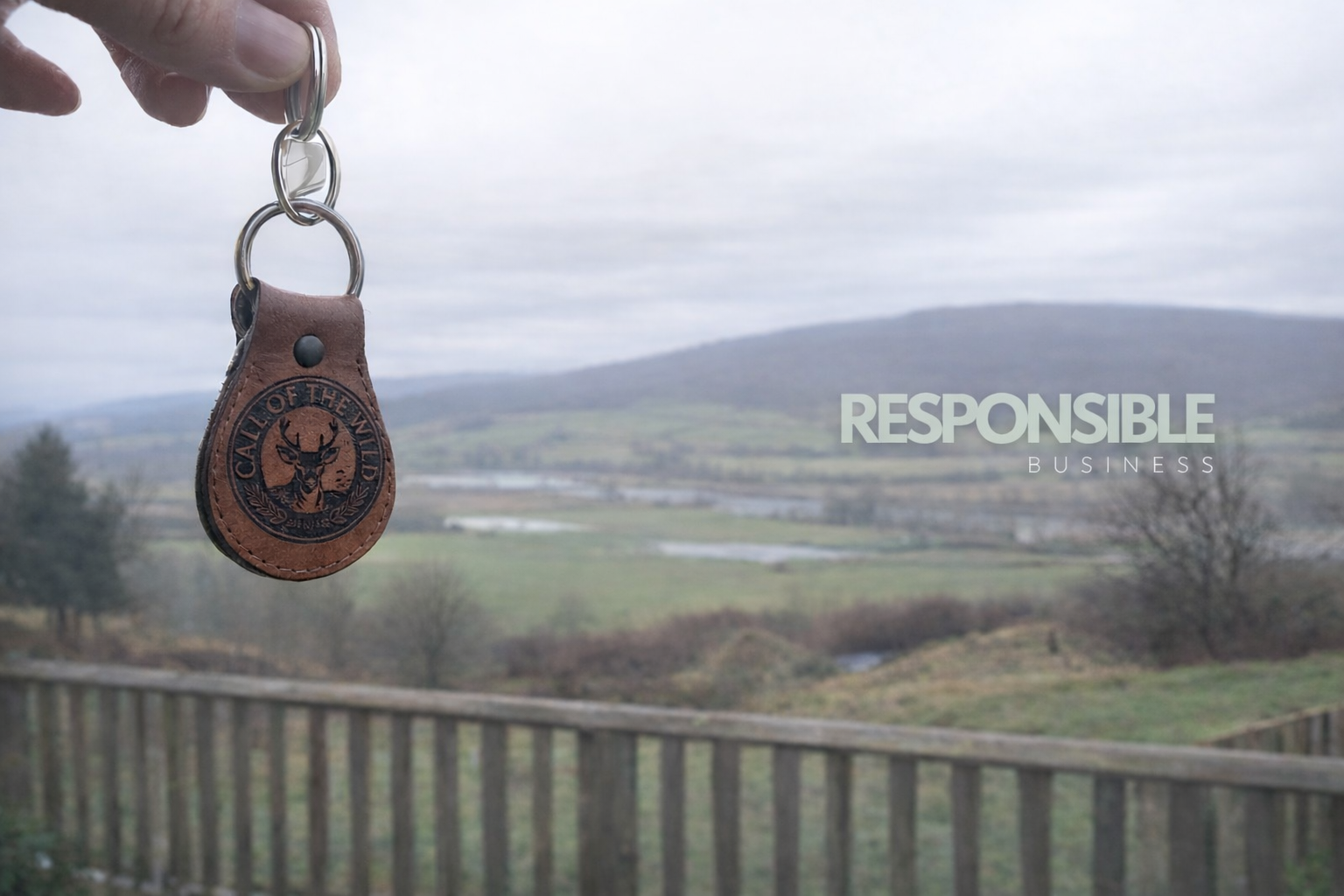
Last week Ali and I stayed with Hamish and Liberty at Tombane Farm, home of Call of the Wild.
You can see very quickly that this is not rural lifestyle theatre.
It is a working landscape. Wet ground underfoot. Heather and lichen. Old pine. Cattle in the field. Mist lifting slowly off the valley. The River Tay winding through farmland below.
There is nothing staged about it.
And within it, a question:
What does enterprise look like when it is accountable to the land it sits on?
Designation Is Not Decoration
Tombane includes 150 acres of nationally designated Site of Special Scientific Interest. That designation is not decorative. It means the land is ecologically significant. It means management matters. It means doing nothing is a decision with consequences.
An SSSI is not a backdrop. It is an obligation.
Responsible stewardship here costs real money. It takes time. It requires active intervention, monitoring and judgement. This is not romantic wilderness. It is managed ecology.
Habitat condition does not maintain itself. Grazing levels. Woodland structure. Wetland hydrology. Species protection. All require deliberate choices.
And those choices sit within economic reality.
Where Responsible Business Becomes Real
Running a designated landscape responsibly has a cost. There are annual management obligations. There are capital pressures. There are decisions about whether to hold, sell, partner or restructure.
This is where responsible business stops being a slogan and becomes a series of trade-offs.
In boardrooms we speak fluently about natural capital, biodiversity risk and ecosystem services. We debate disclosure frameworks and reporting standards. We build models that attempt to quantify resilience.
At Tombane, those concepts are not theoretical.
They are physical.
Wet boots. Fence lines. Grazing decisions. Restoration plans. Budget spreadsheets sitting alongside habitat maps. The constant question of whether income aligns with stewardship or slowly erodes it.
There is a quiet honesty in that.
The Uncomfortable Truth
If we want landscapes like this to remain ecologically intact, they cannot rely on goodwill alone.
They require viable enterprise models. They require capital that understands long-term value. They require partners who see stewardship not as charity, but as infrastructure.
Infrastructure is something we fund because society depends on it. Roads. Energy. Water.
Healthy ecosystems belong in that same category, whether or not we price them properly.
Hamish and Liberty are attempting to build that alignment in real time.
Not perfectly. Not effortlessly. But honestly.
Enterprise Designed Around Constraint
Their work is not about extracting maximum yield from the land. It is about designing enterprise around constraint. Around continuity rather than churn. Around ensuring that the ecological character of the place is stronger in twenty years than it is today.
That requires a different kind of entrepreneurship.
Slower. More considered. Less obsessed with scale for its own sake. More comfortable with limits.
There is something deeply encouraging about seeing a business model shaped by what the land can sustain, rather than forcing the land to adapt to a spreadsheet.
It raises uncomfortable questions.
How many of our enterprises would survive if they were required to maintain, rather than degrade, the systems they depend on?
How often do we treat environmental stewardship as a compliance cost rather than a core operating principle?
What would it mean to design business around regeneration as a baseline rather than an aspiration?
Shaped in Places Like This
The future of responsible business will not be decided solely in city offices.
It will be shaped in places like this. Where ecology, economics and identity intersect in practical decisions. Where land management is not outsourced to a line item but embedded in daily life.
The mist clears slowly in the Highlands. You do not see the whole landscape at once. You see layers emerging. Woodland giving way to mire. The river cutting through farmland. Old systems layered beneath new ones.
Tombane feels a little like that. A working experiment in what enterprise might look like when it is accountable to something older than itself.
And that is worth paying attention to.
READY TO BE A RESPONSIBLE BUSINESS?
Contact us today to learn more about how we can help you take meaningful steps toward a sustainable, purpose-driven future.